
India’s Architectural Gems: Stepwells (Baolis)
India’s stepwells, known as baolis or vavs, are extraordinary examples of architecture shaped by both necessity and artistry. Built to adapt to seasonal water changes, they descend deep into the earth through symmetrical steps, terraces, and intricately carved corridors. From the geometric precision of Chand Baori to the sculptural grandeur of Rani ki Vav, each reflects a unique blend of engineering and devotion. Whether hidden in cities like Agrasen Ki Baoli or expressed as temple tanks like the Pushkarinis of Hampi, they served as both communal and sacred spaces. Today, these sunken monuments stand as timeless reminders of India’s ingenuity, cultural depth, and reverence for water.
Chand Bawri in Abhaneri, Rajasthan
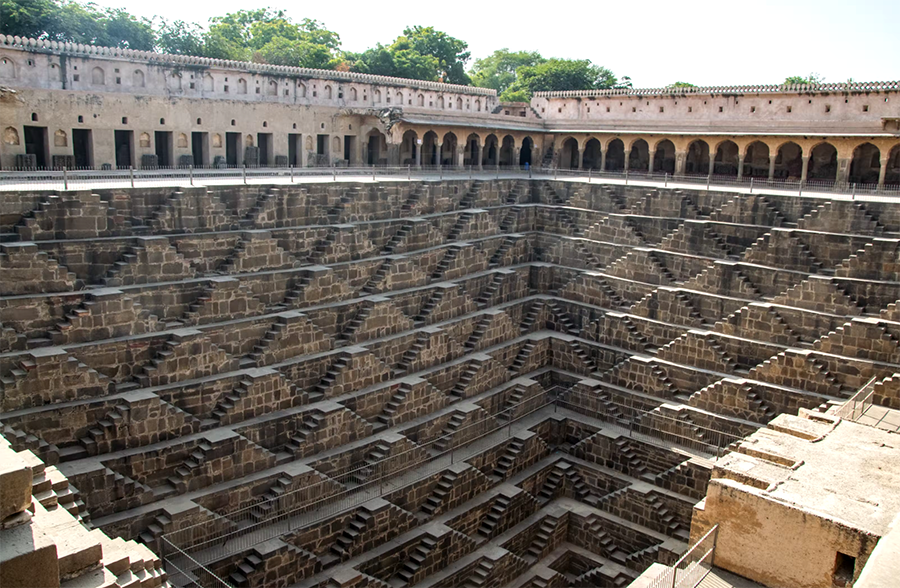
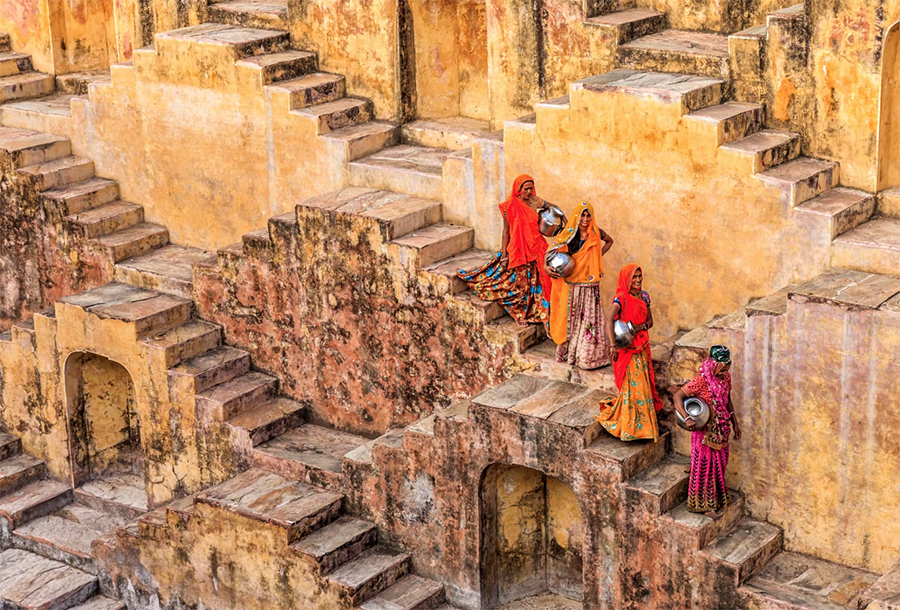
An exquisitely carved maze of 3,500 steps, arranged in perfect symmetry, descends with geometrical precision to reach a well. Built by Rajput ruler Raja Chanda during the 8th-9th Century, Chand Bawri in Abhaneri, Rajasthan, is India’s largest and deepest stepwell. Extending down 13 floors, or 100ft (30m), into the ground, it is a captivating example of inverted architecture.
Rani-ki-Vav, Patan, Gujarat
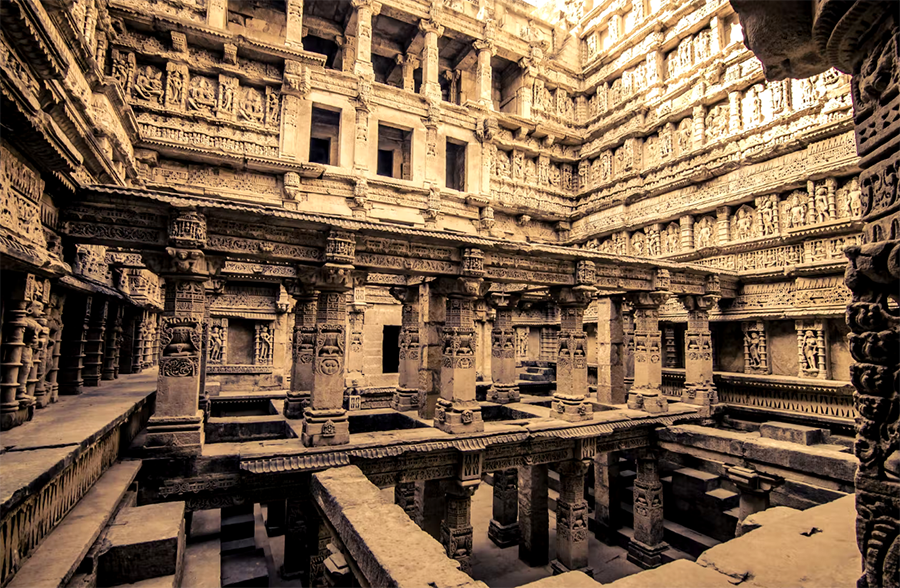
Dropping vertiginously into the ground in a series of carving-covered tiers, this monumental stepwell was constructed on the orders of Udayamati, wife of the Chaulukya king Bhimdev I in the 11th century. The carvings of Vishnu and other deities cover every inch of exposed stone.
Agrasen Ki Baoli, Delhi
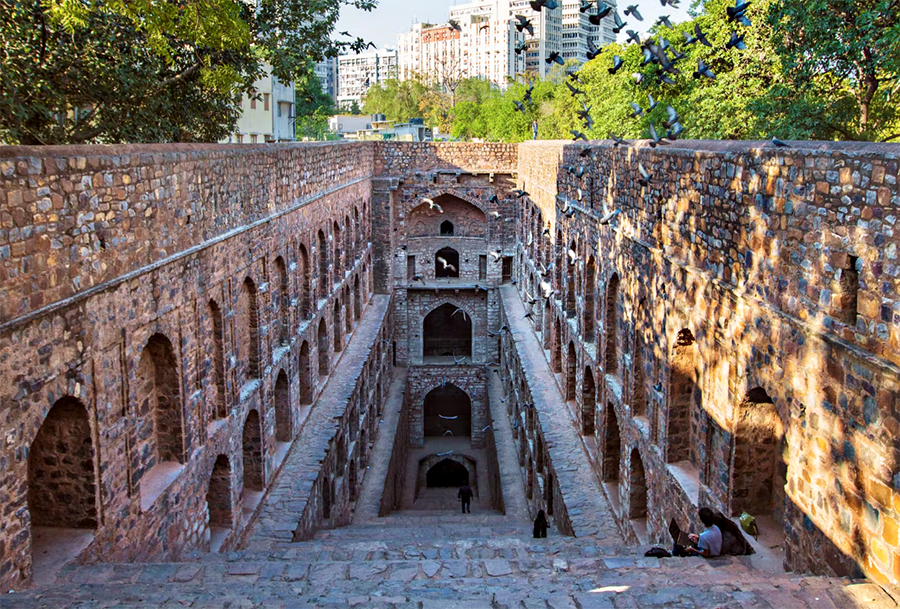
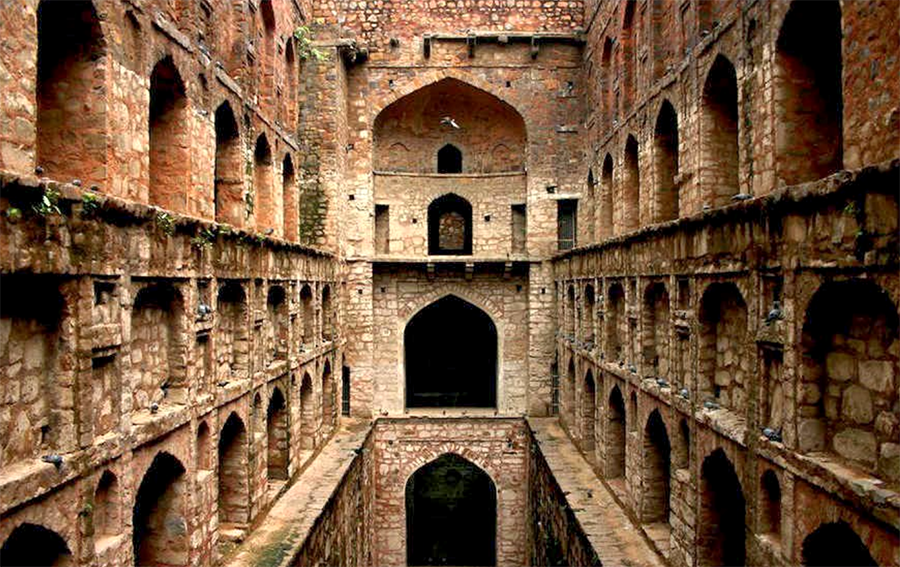
This oft-missed Delhi landmark opens up unexpectedly in the middle of a New Delhi street. The stepwell cuts a 60m-long slice through the earth below the Indian capital, faced with niches set under Islamic arches, accessed via a single sweeping stairway. The structure seen today was most likely constructed during the Tughlaq period in the 14th century, when Delhi was ruled by a dynasty of Turkic sultans.
Adalaj Vav, Adalaj, Gujarat
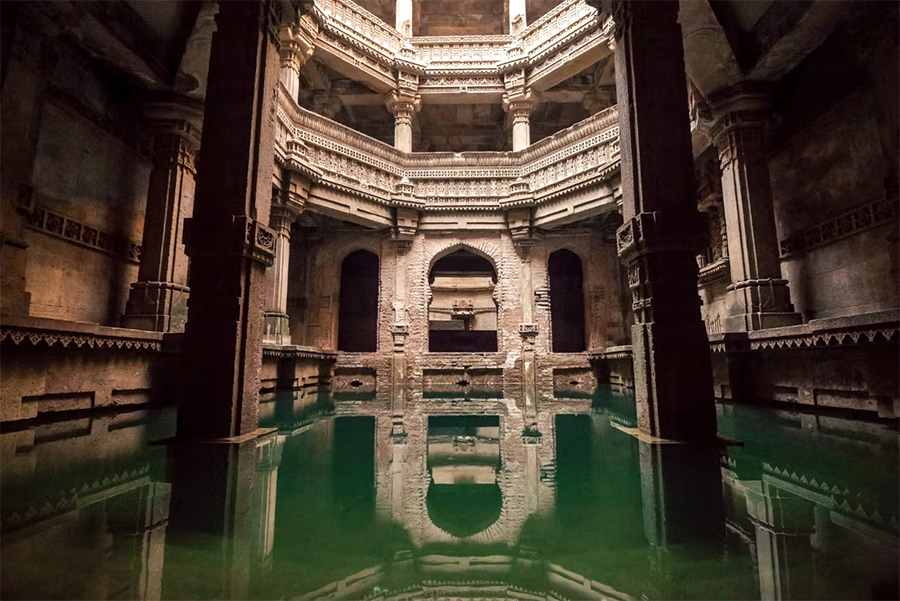
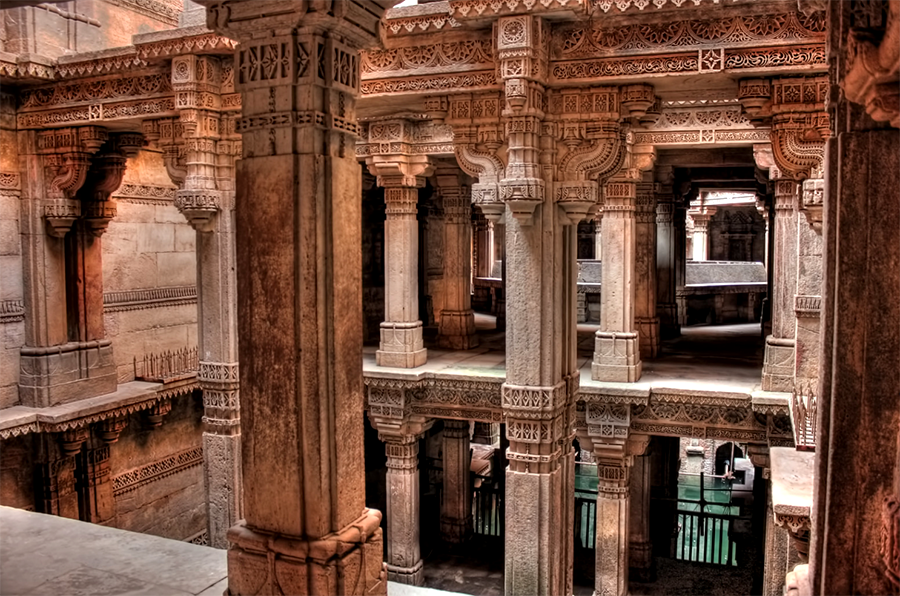
It is a masterpiece of the stonemason’s art – a jewel-box of column-propped arcades surrounding a central, octagonal well shaft, covered in a filigree tracery of carved flowers, elephants, deities and ornamental motifs.
The Pushkarinis of Hampi, Karnataka
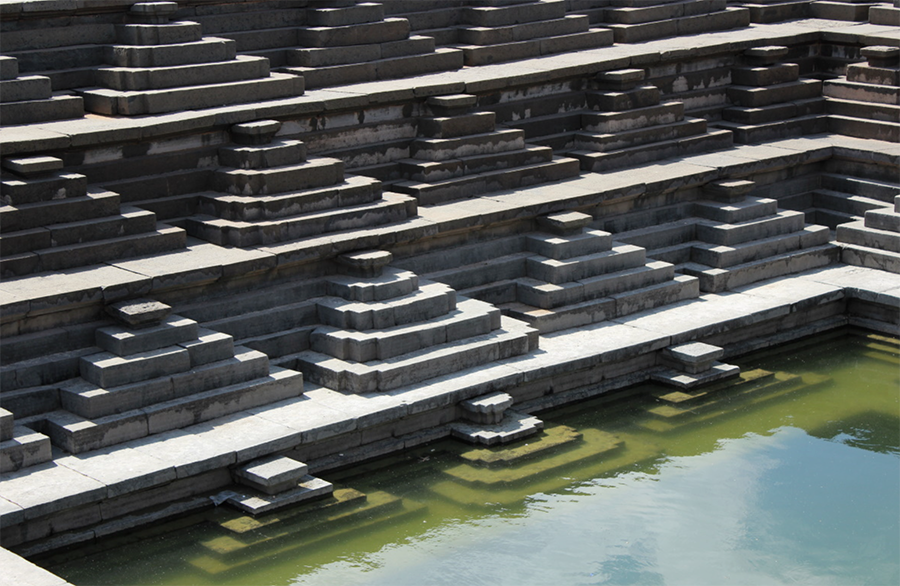
Stepwells are primarily a north Indian tradition, but the Vijayanagar ruins at Hampi are dotted with ceremonial tanks, or pushkarinis, that are built in the stepwell style.
Rajon Ki Baoli, Delhi
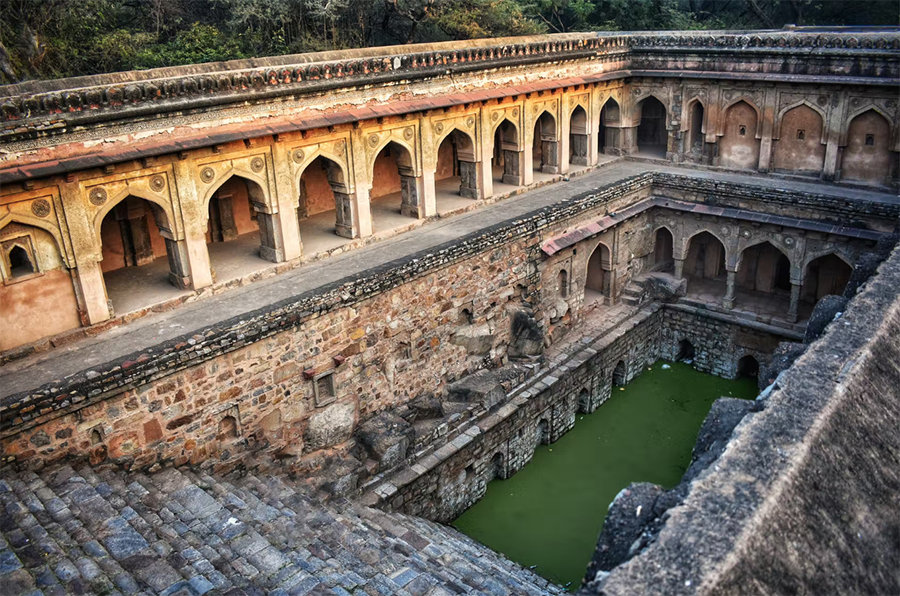
Architecturally, the stepwell is unmistakably Islamic, with stepped tiers of arches decorated with stucco motifs, and niches for lanterns hinting at ceremonial activities after dark. The well was commissioned by Daulat Khan, a prominent official in the government of Delhi’s Lodi Dynasty, in the early years of the 16th century.
Surya Kund Stepwell, Modhera, Gujarat
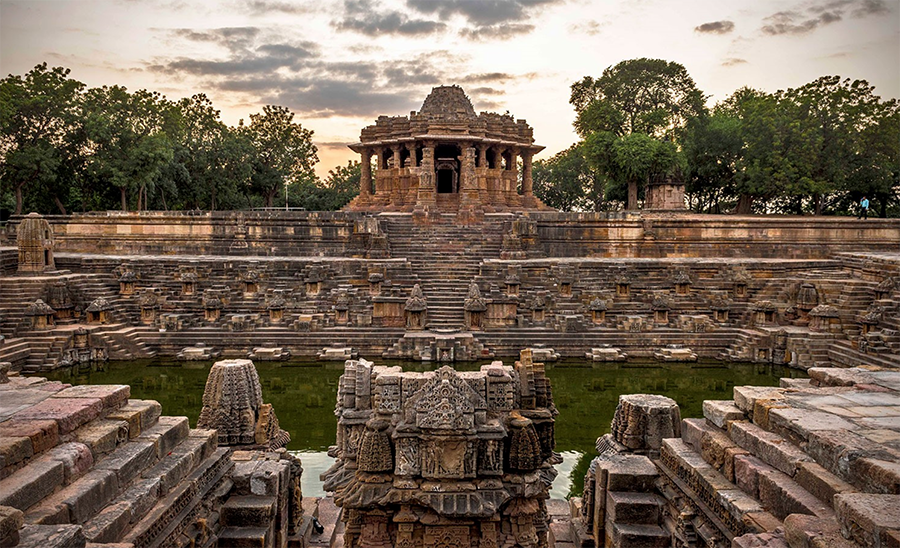
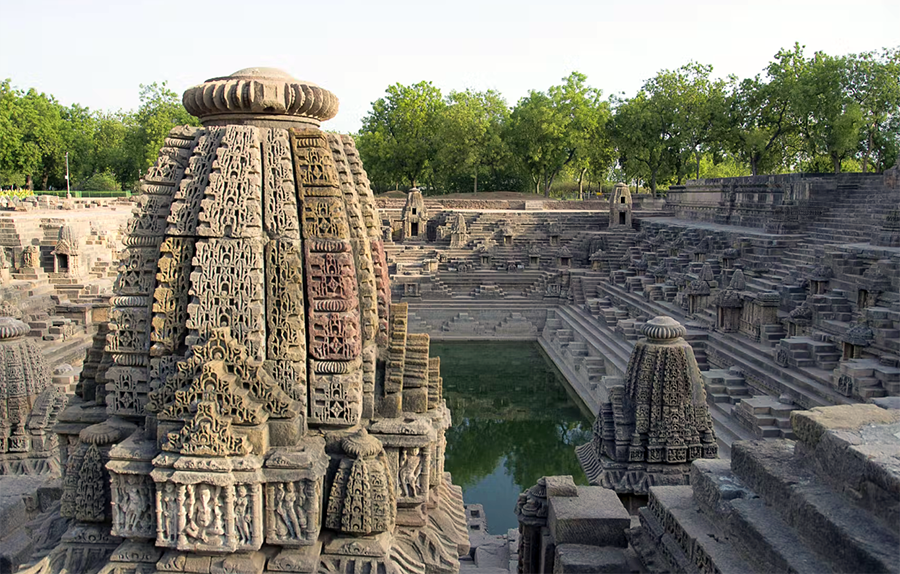
The 11th-century Sun Temple at Modhera was built so that the dawn sun would shine into the inner sanctum during the equinox – a homage to the rulers of the Solanki dynasty, who claimed to be descended from the sun. The temple pavilion backs onto the Surya Kund, a huge stepwell studded with more than 100 small shikharas (spired temples) and shrines, like a sunken art gallery of carved stone. The whole complex was the brainchild of king Bhimdev I, whose wife was responsible for the enormous Rani-ki-Vav at Patan.
via lonelyplanet
Recent Posts


Archives
- August 2026
- May 2026
- March 2026
- May 2024
- April 2024
- March 2024
- January 2024
- October 2023
- July 2023
- June 2023
- March 2023
- December 2022
- November 2022
- October 2022
- September 2022
- August 2022
- July 2022
- June 2022
- May 2022
- April 2022
- March 2022
- February 2022
- January 2022
- December 2021
- November 2021
- October 2021
- September 2021
- July 2021
- June 2021
- May 2021
- April 2021
- March 2021
- February 2021
- January 2021
- December 2020
- November 2020
- October 2020
- September 2020
- August 2020
- July 2020
- June 2020
- May 2020
- April 2020
- March 2020